


Sailing and Camping
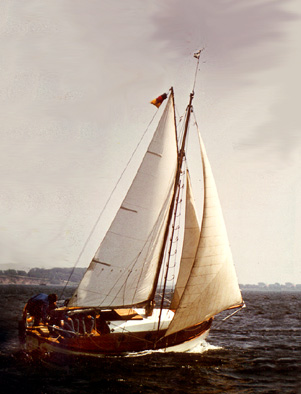
While there are still some places in Africa and Asia where sail-powered fishing or transport vessels are used, these craft have become rarer, as outboard and modified car engines have become available even in the poorest and most remote areas. In most countries people enjoy sailing as a recreational activity. Recreational sailing or yachting can be divided into racing and cruising. Use of sailboats can be further divided into long-distance sailing (such as blue-water or offshore sailing) and daysailing.
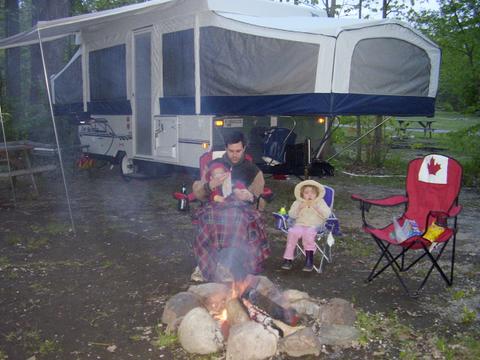
Camping is an outdoor recreational activity. The participants, known as campers, leave urban areas, their home region, or civilization and enjoy nature while spending one or several nights, usually at a campsite, which may have cabins. Camping may involve the use of a tent, a primitive structure, or no shelter at all.
Camping as a recreational activity became popular in the early 20th century. Campers frequent national parks, other publicly owned natural areas, and privately owned campgrounds.
Camping is also used as a cheap form of accommodation for people attending large open air events such as sporting meetings and music festivals. Organizers will provide a field and basic amenities.
Camping describes a range of activities. Survivalist campers set off with little more than their boots, whereas recreational vehicle travelers arrive equipped with their own electricity, heat, and patio furniture. Camping is often enjoyed in conjunction with activities, such as: hiking, hill walking, climbing, canoeing, mountain biking, swimming, and fishing. Camping may be combined with hiking either as backpacking or as a series of day hikes from a central location.
Some people vacation in permanent camps with cabins and other facilities (such as hunting camps or children's summer camps), but a stay at such a camp is usually not considered 'camping'. The term camping (or camping out) may also be applied to those who live outdoors, out of necessity (as in the case of the homeless), or for people waiting overnight in queues. It does not, however, apply to cultures whose technology does not include sophisticated dwellings. Camping may be referred to colloquially as roughing it.



Sailing Skipper Secrets - How to Increase Your Sailboat Anchor's Holding Power
When you have to put out a marine anchor on a short scope--such as in crowded anchorages--you will want to keep the anchor rode horizontal to the bottom. When the tide rises or swells cause the bow to pitch up and down, it places enormous shock loads on the rode.
This creates a vertical pull on the anchor which can cause the flukes to pull out of the bottom. That means your small cruising boat will drag. A sentinel consists of a weight, suspended about halfway down the rode. This helps push the anchor line closer to sea bottom to keep the anchor buried. Follow these three easy steps:
1. Make up your sentinel
Place heavy chain, shackles, or any other suitable weights into a strong bag with handles. Any amount of weight works, but try to combine weights equal to the weight of your anchor for the best holding power.
2. Rig your sentinel for action
Pass a snatch block over the rope part of the anchor rode. Clip the bag handles onto the block's snap shackle. Attach a long line (with a length equal to your rode) to the snatch block. If you don't have a snatch block handy, or if using all-chain rode, substitute a large loop of line or an oversize screw-pin shackle.
3. Send down the sentinel
Ease the weight down the rode with the long line. With rope-chain rode, send the sentinel down until you feel it stop where the rope rode joins the chain rode. Pull it back a few feet and cleat it off. With all-chain rode, send the sentinel down until it contacts the top of your anchor shank. Pull it back about half way up the chain and cleat it off.
Use these three easy steps to keep your sailboat anchor flukes buried deep beneath the seabed in crowded anchorages or stormy weather. You will rest well, knowing that you have a trusty sentinel on watch, working all night long to keep you and your sailing crew safe and sound.
Sailing Navigation Secrets - Use These Magic Nautical GPS "Circles-of-Safety"
Most handheld marine GPS receivers (or chart plotters) have a proximity function that allows you to set up a waypoint surrounded by a circle. You can set an alarm to sound if you touch the circle's edge. This gives you time to take action and turn toward deeper water. Follow these five steps for navigation safety.
1. Look over your nautical chart
Plot your course lines onto your paper navigational chart. Even with the great accuracy of GPS and chart plotters, vector displays often do not give enough detail when sailing close to hazards.
2. Set up hazard waypoints
Measure the navigation latitude and longitude of the center of the hazard. For a cluster of rocks or coral, use the approximate center of the cluster as the center waypoint. Write each hazard waypoint down into a logbook along with the lat and long.
3. Determine your "circle-of-safety"
Use a plotting compass to measure the radius of the circle. Push the needle point into the waypoint. Scribe a circle that surrounds the danger. Add at least 1/2 of that radius for safety.
For example, if the radius of the circle that surrounds the hazard was 1 nautical mile, then your proximity circle should have a radius of at least 1.5 nautical miles. Increase this distance as you see fit, based on maneuverability, point of sail, wind, and current.
4. Program each hazard waypoint
Enter each hazard waypoint into your gps. Label each hazard waypoint so that it cannot be confused with a non-hazard waypoint. For example, you might use Z-1; Z-2, or any other unique name. Double check each hazard waypoint's latitude and longitude with the navigational chart before going to step 5.
5. Set up and test your proximity circles
Check your manual for directions to access and set up "proximity" waypoints. Access the proximity menu and set the alarm toggle to "on". Go to the menu to select each of your hazard waypoints.
Set your circle radius with the toggle (up-down) key. Finish one hazard waypoint; then page over to the route screen. Check to make sure the computer has drawn the correct size proximity circle. Repeat this method for all other hazards.
********************
Use these five easy steps to set up proximity "circles-of-safety" in your nautical GPS. Boost your sailing navigation skills to the next level for worry-free sailing wherever in the world you choose to cruise.
Sailing Navigation Secrets - Do You Know Your Sailing Right-of-Way Rules?
You are sailing on port tack and see another sailboat ahead just off your starboard bow. Should you pass him to port or to starboard? If you are anything like me, those crazy rules when two sailboats meet each other can confuse even the saltiest sailor.
Open up a copy of the Navigation Rules (nautical rules of the road), and you will find specific rules that show sailboats how to maneuver to avoid colliding with one another. How you maneuver will be based on:
* Which tack you are on (or the side of the boat that the wind blows over; i.e. port side = port tack).
* Whether you are upwind or downwind (to windward or to leeward) of the other sailboat.
* When you overtake another sailboat (irrelevant of tack or wind relationship).
Many of these rules were written long ago when big square rigged ships needed lots of space to maneuver. In some cases, a bigger sailing ship could block the wind of a smaller ship. This could cause the smaller ship to go aground. Modern sloops and cutters are much more maneuverable today, but you are still stuck with the older rules.
Make it a lot easier to remember any sailing rule with this simple silly phrase: PORT-WIND-O. Use this memory aid anytime you approach another sailboat when day sailing, cruising or racing. This memory key always shows which sailboat has to stay out of the way of the other sailboat. Break it down into three easy parts like this...
PORT
When both sailboats are on opposite tacks (one has the wind on the port side and the other has the wind on the starboard side), the PORT tack vessel has to stay out of the way of the other sailboat.
WIND
When both sailboats have the wind on the same side, the sailboat to WIND-ward has to stay out of the way of the sailboat to leeward.
O
When one sailboat O-vertakes another sailboat from behind the beam, it has to stay out of the way of the other sailboat. This applies to vessels under sail or under power.
*********************
Use this simple, easy-to-remember mnemonic to know just what you need to do when you approach another small cruising or racing sailboat. You will boost your sailing navigation skipper-skills and be able to maneuver with confidence wherever you choose to sail.
Buying a Sailboat on the Internet - Pitfalls and Dangers
The internet is a great and wonderful thing where you can find out just about anything you want to know and purchase anything you want.
However, when it comes to investing in your dream sailboat, it pays handsomely to be very cautious and thorough before going ahead with a purchase. And remember, that boats like cars, often look much better in a photographic image than in reality!!
The following is very much a cautionary tale of a real life situation I came across in Papeete, French Polynesia.
...'It is at this point our crew are joined by an Australian yachtsman slowly working his way back to New South Wales. They first met him at the Balboa Yacht Club in Panama. His is an excruciatingly painful account and worth repeating here as a cautionary tale.
Some eighteen months previously he had purchased a sloop, by private sale, on the internet. It was 'laying up' on Mystic River, Connecticut, in the USA. He arrived there to discover that the boat was in far worse condition than he had been led to believe. He spent the whole winter working and living on board in freezing conditions preparing it for the voyage.
Imagine waking every morning with ice hanging from your mustache and having to crawl out of your bunk, climb down the ladder, trudge through a foot of snow to the ablution block, re-climb the ladder, and begin the days work with fingers that will hardly move, and brain numbed into lethargy from the cold. For an Australian raised in the warmth of NSW it must have been soul destroying.
During that period he spent more on the craft than what he had originally paid for it. This was not part of the plan! Finally setting sail, his trip to date had been one disaster following another - too many to repeat here, and too depressing to contemplate. The last news our crew had of him was here in Papeete. He had arrived under sail as his engine had seized up completely several days out of Tahiti, and he had been told the required parts would be five weeks in coming. He was fast running out of funds and still three thousand nautical miles from home.
Visiting him aboard his boat the next day, our captain and sibling crew could not believe the appalling conditions in which he existed. The boat was dark, damp, and quite chilly, despite the warmth of the Tahiti sun. The smell of mould and dry rot was almost overpowering and after a short chat and looking around at his many problems, our crew manage to winkle him ashore to a warm and sunny café for an obligatory Hinano. Here, his glum outlook brightens somewhat as the amber liquid takes effect.
A respectable time later, they make their departures, waving cheerily as he disappears back down the dock toward his boat, no doubt to stare once again at the overwhelming number of things to be fixed before he sets sail again.
As at the time our little ship departed Tahiti, his parts had yet to arrive and he was never heard of again - he had a vhf radio on board but it was ineffectual at best.
From time to time his name came up in conversation as to his possible progress and whereabouts, but not having any means of contact, our crew could only suppose what and where.
There being no reports of vessels sinking or missing during the next six months or so,they could only assume that he finally did make it back to Australia - any prayers that went up to 'the one who made us', for the safety of sailors at sea, would hereafter have his name on the list.'
The moral of this story is never part with any money on the internet for any vessel before an inspection by yourself and also preferably by an authorized marine surveyor. If you are going to go cruising offshore for extended periods you want to know that she meets your criteria and is going to be able to stand up to the sometimes tough conditions you are going to meet along the way.
Best practice would be to use the internet only as a search tool to locate the vessel which fits your needs and then put into motion a detailed and strict procedure which you follow rigidly.
This will ensure that when you are completely happy and arrive at a point to negotiate a price, you are comfortable with your position. Ideally, you will agree on a price with the seller, pay a deposit, with the balance payable on delivery.
By following this procedure stringently you will finish up with a well found vessel that will give you many happy years of sailing and that will take you to many of the wonderful cruising grounds of this earth of ours.
Planning Your Sailboat 'Adventure of a Lifetime' Voyage
Setting sail in your own sailboat and voyaging across the many oceans of our planet and visiting the myriad fantastic destinations en route is the easy part of your adventure.
Planning ahead of time to get it right is the more difficult of the two, so you need to begin well in advance of your actual departure date. Depending on your own situations, that period could be months or even years. No matter what your time frame is, the more detailed your planning is, the better you will cope with all the situations that the sea, Mother Nature and human elements will throw at you (and they will) during your odyssey. In the event you will be amazed at the variety of events you will encounter along the way. They will range from the fantastic to the bizarre, monotonous to exhilarating, scary to exciting, and sometimes downright challenging. This is all part of the experience, but in the main these experiences will be wonderful and uplifting and once again you will surprise yourself at just how simply, many adversities you will overcome with your own gathered knowledge and ingenuity.
An 'Old Salt' once said to me when I was in the early stages of planning my odyssey: 'You may not be fully qualified/experienced when you set sail for the first time and leave port, but you sure as hell will be whenever it is that you return!'. Never truer words were spoken and I can assure you that the unbelievable storehouse of knowledge and experience that you will build during the time you are away will be a constant source of amazement to you and on which you will forever be able to draw upon.
So, now is the time to begin. It does not matter whether you actually own your own sailboat yet, that will happen as part of the process. This a good place to start - draw up a thoughtful and lengthy list of your criteria for the sailboat of your dreams.
A few headings could be:
Class - sloop, ketch, schooner etc.
Size - length, beam and draft.
Keel - long, deep, bulb, retracting etc
Deck layout - aft or centre cockpit, single forestay, cutter rig, running backstays etc.
Cabin layout - how many berths, master cabin fore or aft.
Electronics - radar, GPS, plotting, hf radio, computer with weather software, and now, AIS.
These will keep you busy for a time.
Depending on the level of your sailing skills, you can take any number of sailing courses, however, make sure they include more practical sessions than theory - you can read all the books on sailing technique etc. in the world, but nothing beats getting out on the water and putting sailing miles under your belt. Go down to the local sailing club and get yourself a regular crew position on a club racer. If you live by the water you can buy a small and inexpensive sailing dinghy and get all the fun and experience you can poke a stick at.
Then you can go on and book yourself into a 'safety at sea' course.
Also, during this time, book yourself into a local 'First Aid' course. From my own experience of a crew member fracturing a couple of ribs mid Pacific, I can tell you it is invaluable knowledge to have. It will also assist in deciding the make up of your medical kit.
Next, study navigation. With all the electronics nowadays, this is an area that tends to be left aside more and more, leaving the electronics to take care of it. This fine as they do a wonderful job, but what if they all go down for some reason? lightning strikes, knockdown, flooding or other damage. You need to have navigational skills to be able to navigate if this adversity strikes. Also, include a course on astro navigation as this is a marvellous feeling, when mastered, being able to use a sextant and make a plot within a nautical mile or two of your GPS readings.
You will need to take a course and get your ticket for HF radio. Along with this you will get call signs etc. for your boat.
Get a two metre length of supple line from your local chandler and set it up on a convenient bar/rail at home somewhere - in your office, the bed end, back of a chair and constantly practice your knot tying until you can tie them automatically. The knots you will use the most will be bowline, clove hitch, fishermens bend, rolling hitch - become proficient at these and as many others as you can.
Study charts and all their markings, buoys, rules of the road and ships lights.
Flags of all nations is a fascinating subject, along with nautical flags and what they mean.
You are going to be busy fitting all this in and my suggestion is to start as soon as possible and get as much out of the way prior to actually purchasing your dream sailboat. As your 'set sail' date moves closer you will find a myriad other things need your attention and it is easy to put learning some of these other skills aside - so get as many under your belt as you can well ahead of time.
Finally, when you do have a few minutes to spare, read any sailing material you can get your hands on and especially don't miss 'Sailing Alone Around the World' by Capt. Joshua Slocum.
Good luck and exciting and safe sailing.
Safety at Sea - Some Lessons Learned From Yacht Running Aground at Night
A well-prepared yacht with a prudent skipper would have avoided the accident at sea described below. Read the scenario, based on a true story, and think about what should have been done differently.
While traveling under motor at night, the yacht's engine failed. Efforts to restart it failed. The skipper and crew of two were unable to raise a sail before the yacht struck rocks of an island. Fortunately, they were able to get ashore safely, apart from the skipper injuring his ankle.
What happened next? They were unable to make an emergency call until next morning, when one of the crew climbed up the island and found mobile phone coverage. After the call was made, a helicopter was dispatched to rescue the trio.
What can we learn from this?
When motoring at night the skipper should allow extra sea room around obstacles to avoid the risk of running aground.
As a matter of practice except in very heavy conditions, the main should be hoisted although not necessarily to its full height. Most experienced skippers would agree that this leads to a far more comfortable ride than motoring without a steadying sail.
Skippers delivering yachts usually underpower them by having a reef permanently in the main and by using a headsail smaller than the conditions normally would call for. That way the boat is ready for any sudden increase in wind or the failure of the engine.
In any case - if you don't want to rig a headsail - one should be ready for use in an emergency. If not on a furler, it should be rigged with its sheets and halyard attached and tied down on the foredeck.
A VHF radio and EPIRB should have been part of the yacht's basic communication and safety equipment. The skipper would then make a 'Mayday' call and set off the EPIRB. Rescuers would have been notified that evening, i.e. 13 hours earlier than was the case.
While they were fortunate to have a mobile phone to make contact, one wonders how long it would have been before they were found if there had been no mobile coverage on that island.
The most disturbing thing about the whole report is the apparent lack of any attempt to equip the yacht with even the most basic safety gear for going to sea.
What to Do When You Can't Anchor at Night
Any voyage that lasts longer than a single day means that a yacht's crew has to be organised into watches. And, to ensure the safety of all aboard, good communication between watches and the navigator is essential. How is this best achieved?
Watch systems
Each watch has to have its share of sailing skills - helming, foredeck, reefing, trimming. It is preferable that the navigator stands out of watches and is available whenever required. One watch should pass on the relevant information to its successor, remembering that it's easy enough for some of the details to be overlooked.
A common system is two watches working four hours in the daytime (i.e. between 6.00 am and 6.00 pm) and three hours at night. This means that the watches rotate over a two day period and no one is stuck on the midnight to 3.00 am shift. Meals can be easily prepared by a member of the on watch so that they are ready to be served at the change of watch.
In the Volvo race earlier this year, the Green Dragon crew worked a watch system with four watches of two men. Although the watch changed every two hours there were always four people on deck. This meant that the crew members coming on watch could be briefed by those remaining on deck and those going off watch could go below to rest straight away. Although possibly disruptive of people's sleep and meal times, this watch system allowed the crew to drive the yacht hard while maintaining the best possible knowledge of the boat's performance in the prevailing wind and sea conditions.
Watch-keeping responsibilities
Of course, being on watch is not simply a matter of making a boat sail fast. The prime job is keeping the boat safe by maintaining a proper lookout. This means checking the horizon regularly for any sign of vessels by day or their lights by night and making any alterations to course necessary to avoid them.
Although the yacht's position may be recorded by GPS it is also important to maintain a deck log of courses and other information such as wind speed and direction. You never know when the electronics aboard will fail or the GPS become unreliable.
Even the best navigators need a starting point (departure) of a known position to base his/her dead reckoning on.
Standing orders
Ships have written standing orders so that all watch-keepers know when to call on the captain for assistance. Aboard yachts, similar rules often exist, but they may not be in writing.
For instance, whether navigating on a cruise or while racing, I always ask to be woken me if there is any significant change in wind speed and/or direction, if visibility is seriously reduced, or if any unusual event occurs.
The good skipper/navigator will issue a set of instructions, starting with: "Wake me if..." It is up to the crew to make sure those instructions are followed. It doesn't matter if the navigator has only just turned in after many hours of tactical navigation. Letting the navigator rest may put everyone aboard at risk. It is false kindness, and very dangerous.
Learn How to Sail - Sailing Basics
Sailing terms
As we all know when setting out to learn how to sail the prospect of the task can be daunting enough but sailing terms can be downright baffling.
However, in order to sail they are a must and it is imperative that you learn them. The most important of terms would have to be hull, beam, port and starboard. These are fundamental terms used in sailing.
Understanding these terms will help you to communicate effectively when learning to sail.
Here is a brief overview so as to give you an idea of the basics.
The points of sails
The points of sails, are also referred to as sailing positions, are important as they will determine in which direction the boat will travel. The three basic courses are beating, reaching and running. The intermediate courses are broad and close reach.
Changing direction
In order to change the direction of the boat you can do a maneuver come about, which causes the boat to turn to leeward side and turns into the wind.
Another maneuver to change direction is called a jibe. This is a faster maneuver than the come about as the boat is turned across the wind, rather than into the wind.
Rules
In order to accomplish any of the above sailing rules need to be obeyed at all times for safety reasons. The most important rule is the right of way rule or ROW, to avoid collisions with any other boat. The key to your success in sailing is to be safe.